
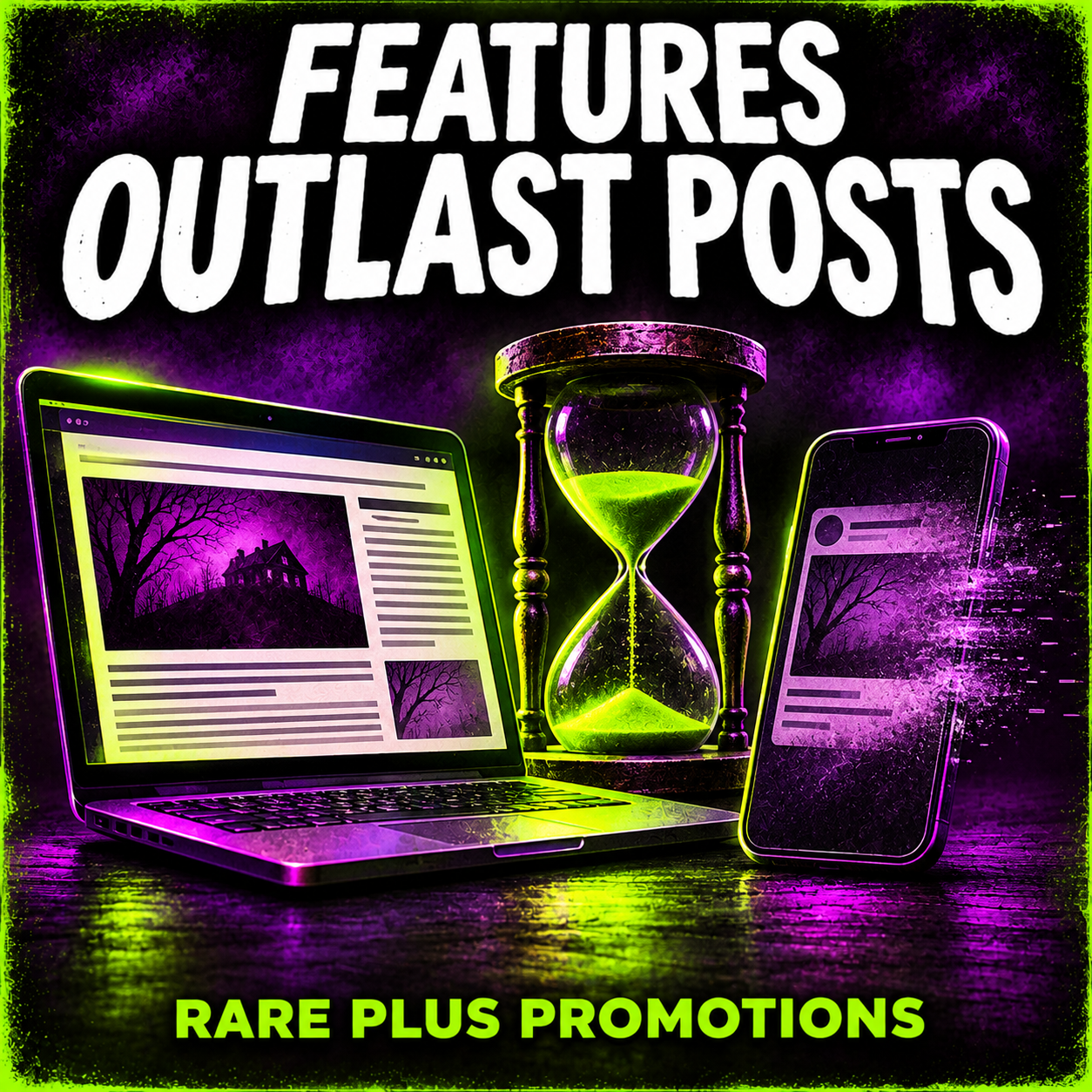

A social media post is useful for getting a film announcement in front of people quickly. It can show the artwork, identify the title and point readers toward a trailer or product page. But a short caption has limits. Some projects need more space to explain their background, production approach, release format or place within a particular genre. A feature article can provide that context and give interested readers a fuller introduction than a brief social post allows.
A social post is built for quick discovery
Social feeds move quickly, so a promotional post needs to communicate its main point in a small amount of space. A strong image and concise caption can introduce a title, announce a release date or direct people to a campaign. This makes social posts useful for timely reminders and short updates.
The limitation is that readers may see only a small part of the message before moving on. A caption cannot always explain the story behind a restoration, the details of a physical edition and the background of an independent production at the same time. Trying to include everything can make the post crowded and difficult to follow.
An article gives the project room to breathe
A feature article can organize information into sections. It may introduce the film, explain its premise, discuss relevant production details and describe the release. Readers who want more than a quick announcement can spend time with the information in one place.
This is particularly useful for horror and cult films, where context can help explain why a title may interest a specialist audience. A filmmaker might describe the effects approach, the setting, the production history or the decision to issue a physical edition. A label might explain the confirmed features of a new disc release. The article should focus on verifiable details rather than promotional claims that cannot be supported.
Useful information is better than empty hype
A longer article is not automatically better. It needs a clear purpose and information that readers can use. Start with a straightforward introduction to the film and explain what makes the project distinctive. Include the release format, date and availability details when confirmed.
- Use the correct film title and an accurate synopsis.
- Explain the genre and the intended audience.
- Include confirmed production or release background.
- Describe physical edition details only when verified.
- Provide an official link for further information.
Do not invent quotes, reviews, awards, audience reactions or production facts to fill space. If a detail is unknown, leave it out or ask the filmmaker for confirmation. Accuracy matters more than making every section sound dramatic.
Articles and social posts can work together
The two formats do different jobs. An article can provide the fuller explanation, while social posts can introduce it to people who may want to read more. A short post can highlight one detail from the article and link to the full feature. Another update can focus on a confirmed release date or physical edition.
This gives the campaign more than one way to communicate without forcing every detail into every caption. Keep the information consistent across the article and social posts. If a date or product detail changes, update the relevant pages and future announcements.
Think about what readers may need later
A social post is often encountered in the moment it appears. An article can remain available as a reference that someone may find later through the site or a shared link. It can be useful when a reader wants to revisit the film’s details or send the information to someone else.
That does not mean every article will continue attracting readers indefinitely. Ongoing visibility depends on the site, the topic, how the article is shared and whether people are interested in the film. A feature is a place for fuller information, not a guarantee of search traffic or sales.
Make the article easy to act on
Give the reader a clear next step. Depending on the project, that may be visiting the official film page, watching the trailer, viewing a pre-order listing or learning about a crowdfunding campaign. Check every link before publication and make sure it leads to the correct destination.
If the feature is sponsored, disclose that clearly. Readers should understand when a brand has been paid to publish promotional content. A sponsored feature should not be presented as an independent review.
How the Diamond package can help
Rare Plus Promotions’ Diamond Promotion Package costs $220 USD. It includes everything in Gold: posts on Instagram and X shared by both Physical Media Hub and Rare Flicks Plus! It also includes a dedicated feature article on physicalmediahub.shop that is shared to social channels, plus a spot on the Amazon storefront. Paid promotional posts are clearly labelled as sponsored.
The dedicated article provides more room to explain a horror or cult physical media release than a short social caption. The social placements help introduce the feature, while the Amazon storefront spot is an additional part of the package. None of these placements guarantees views, clicks, orders or sales. Results depend on the project, supplied information, timing and audience response.
Review the Diamond Promotion Package and compare the options on the packages page.
Questions? Email rareflicksplus@outlook.com.

Leave a Reply